
In Conversation With
Toby Mott
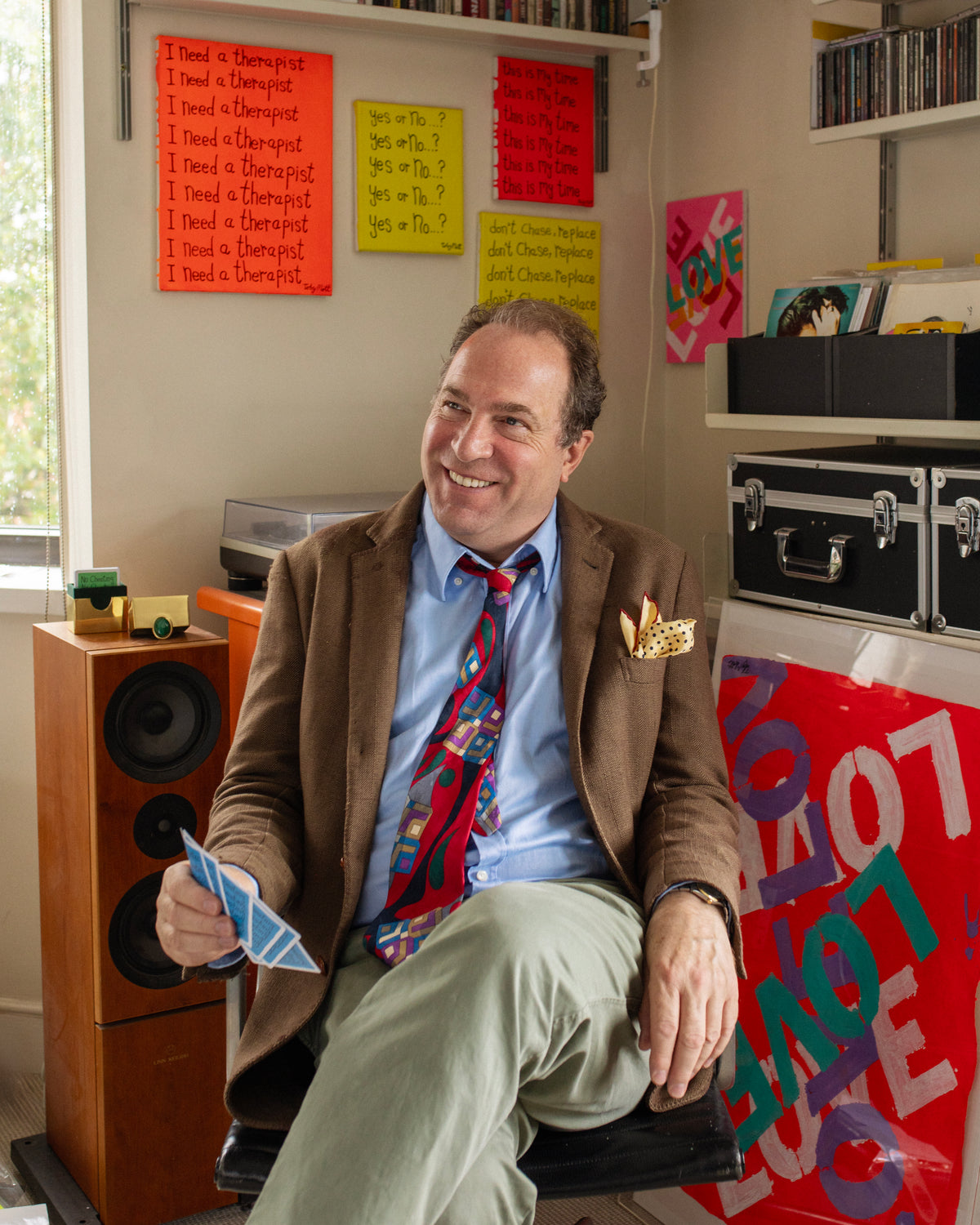
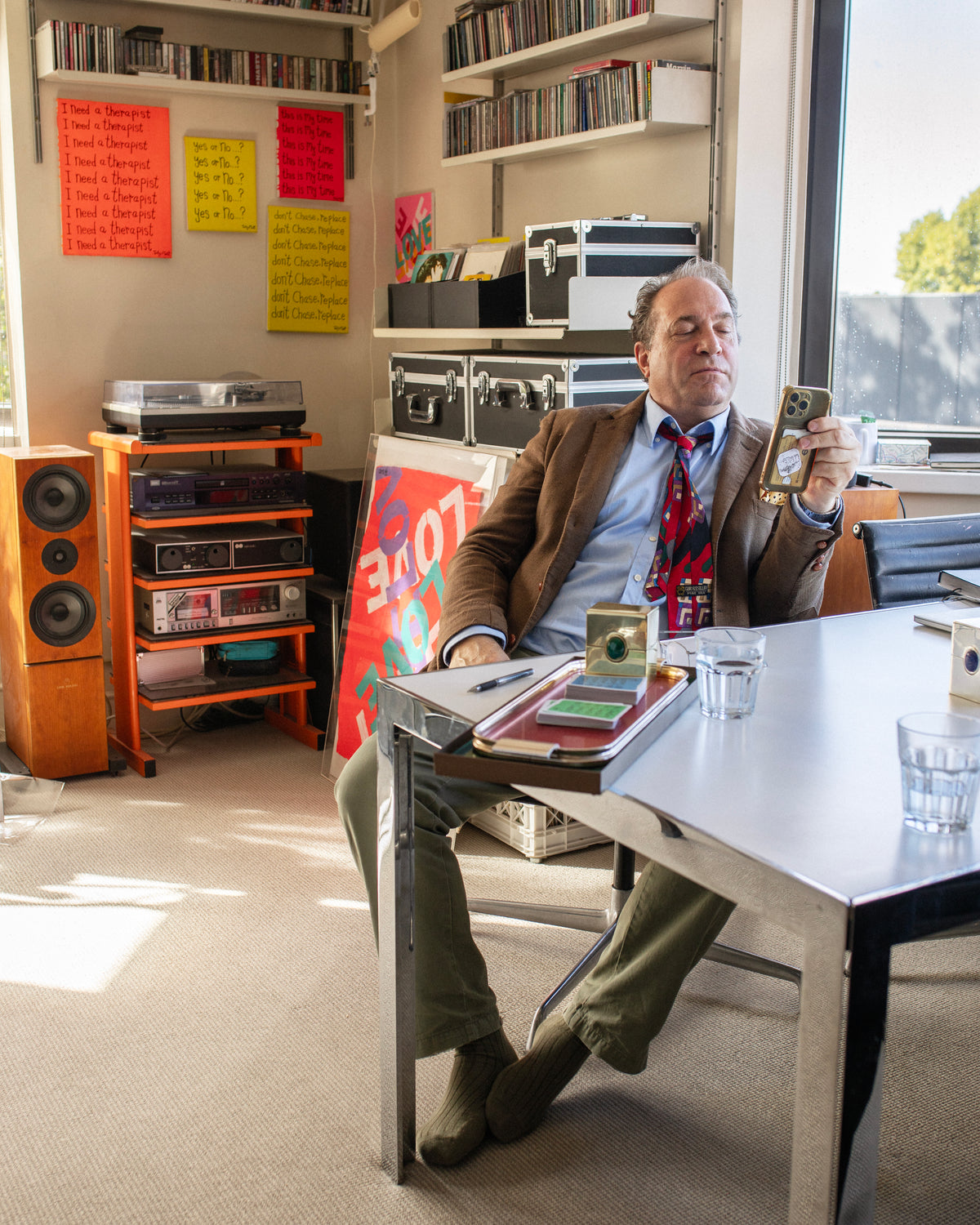
Matilda has been a fan of Toby Mott’s work since she was young, when an “I ♥ ice cream” poster of his hung on her bedroom wall. So when it came to our first deck of playing cards, he was the first person who sprang to mind for lines-based art.
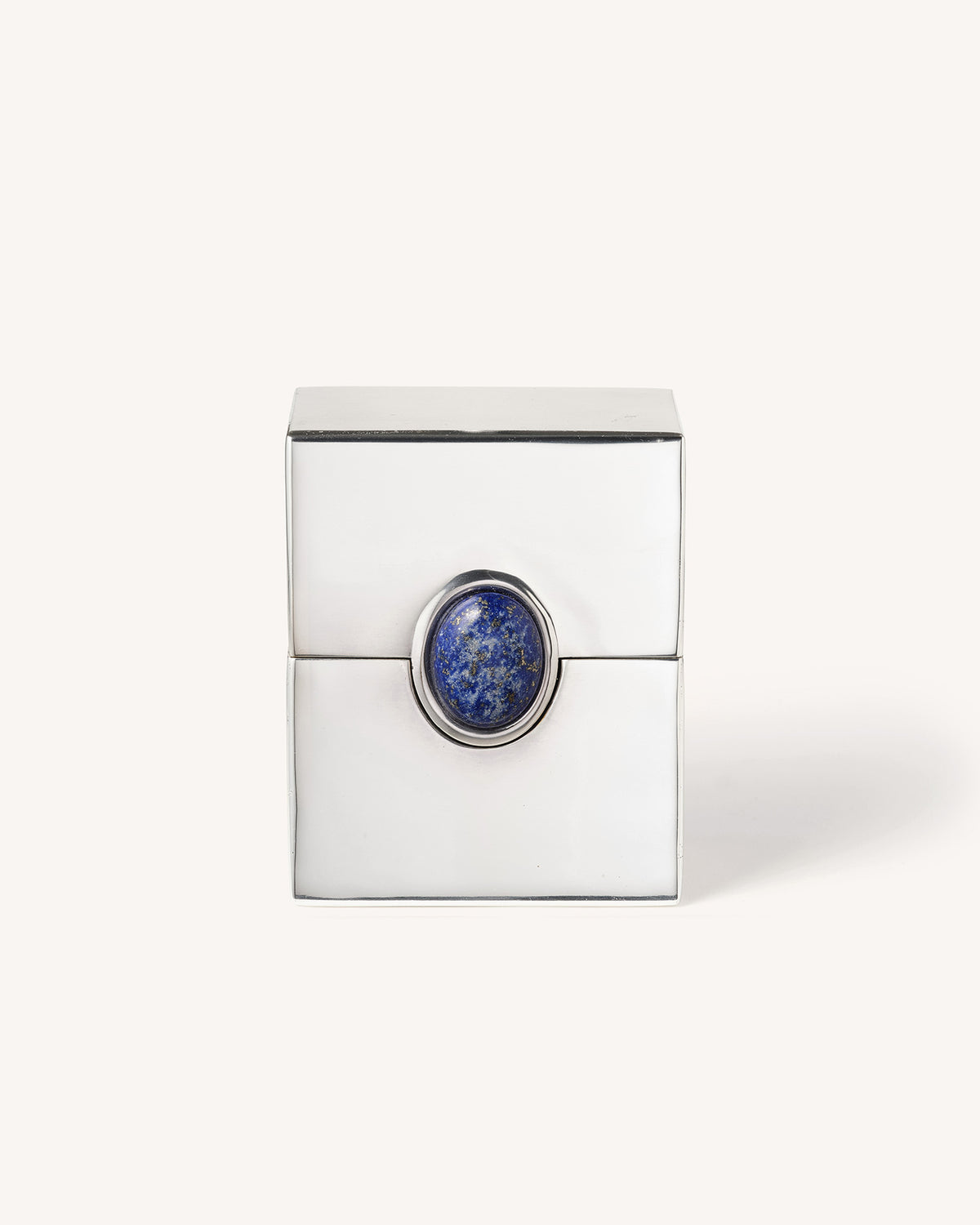
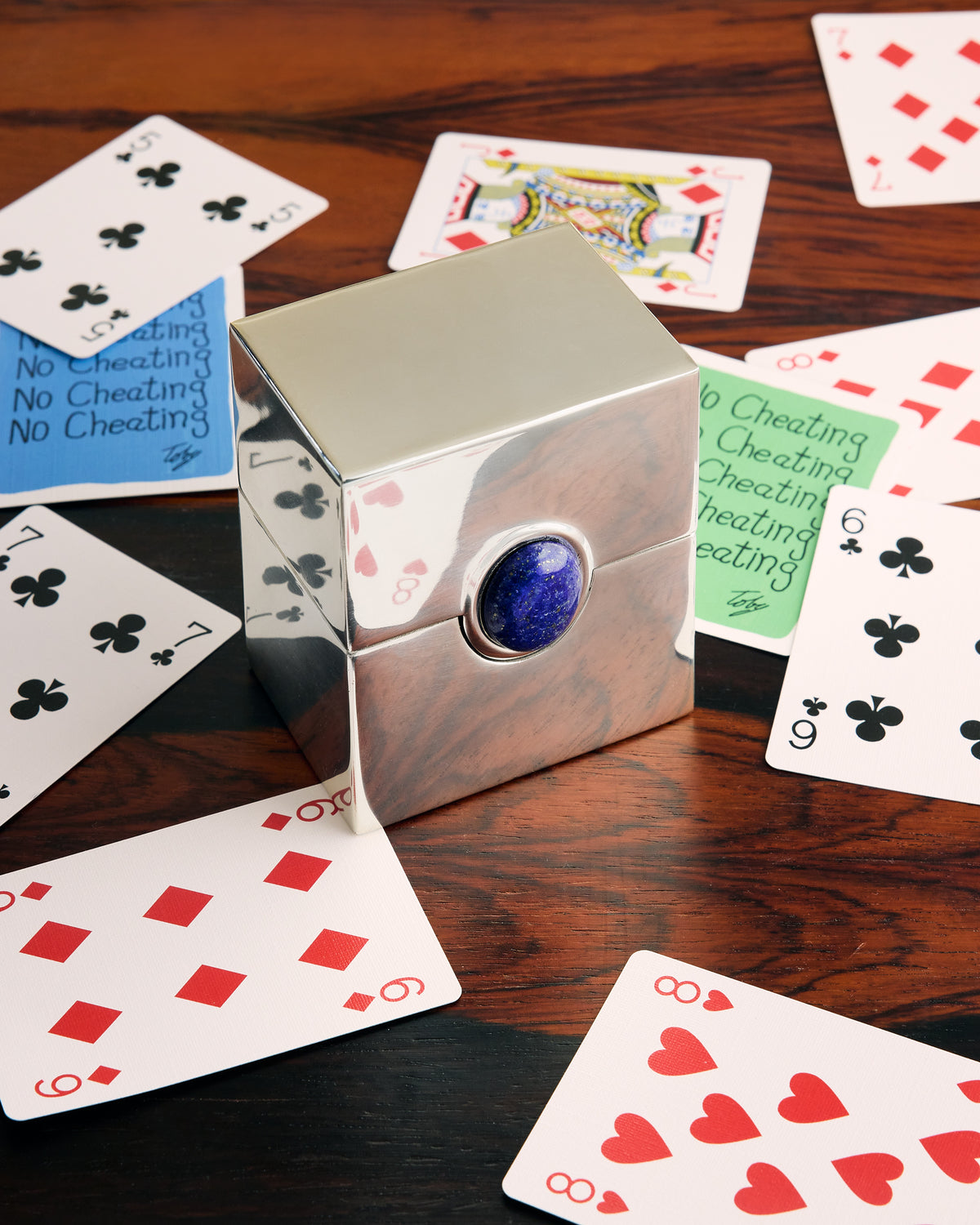
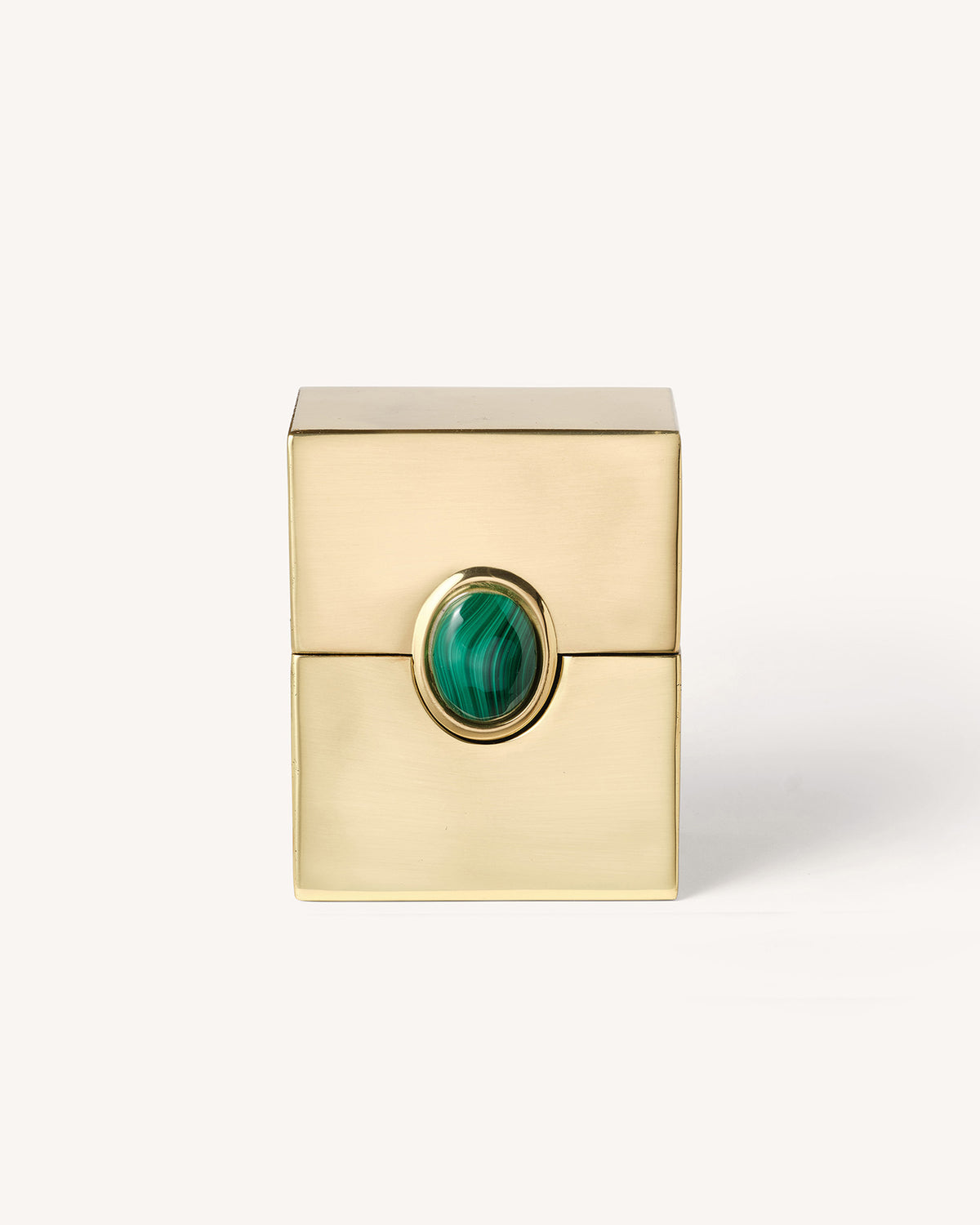
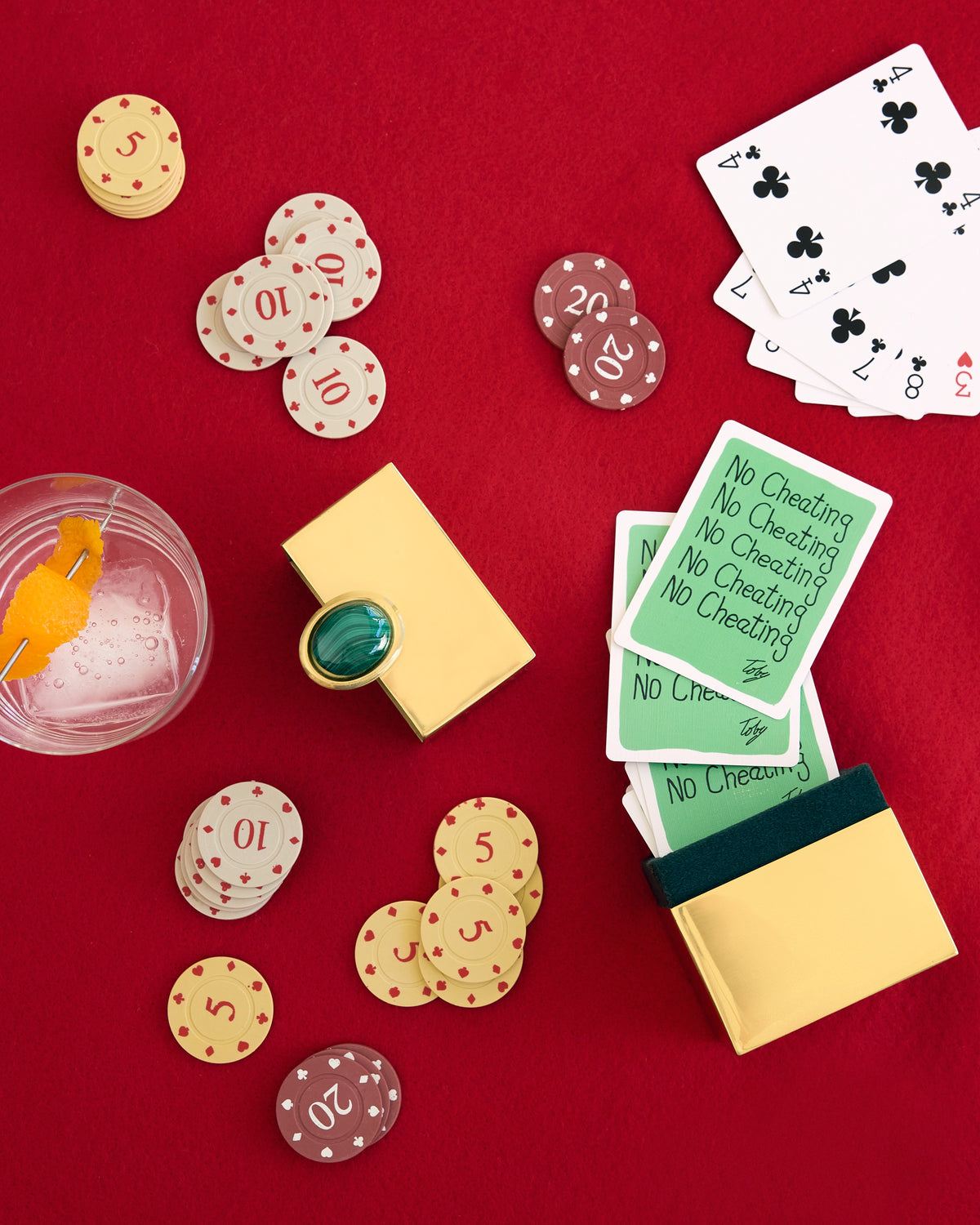
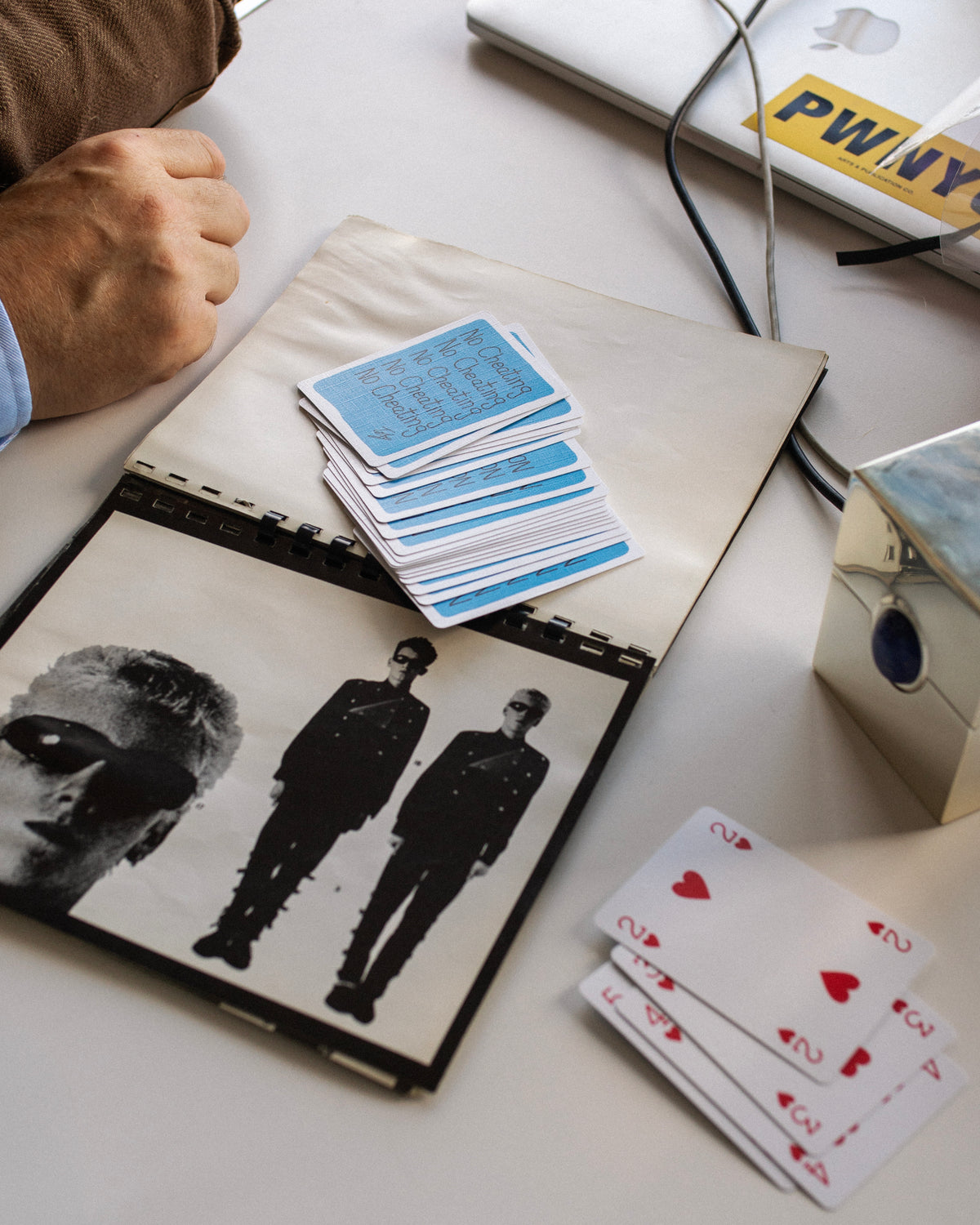
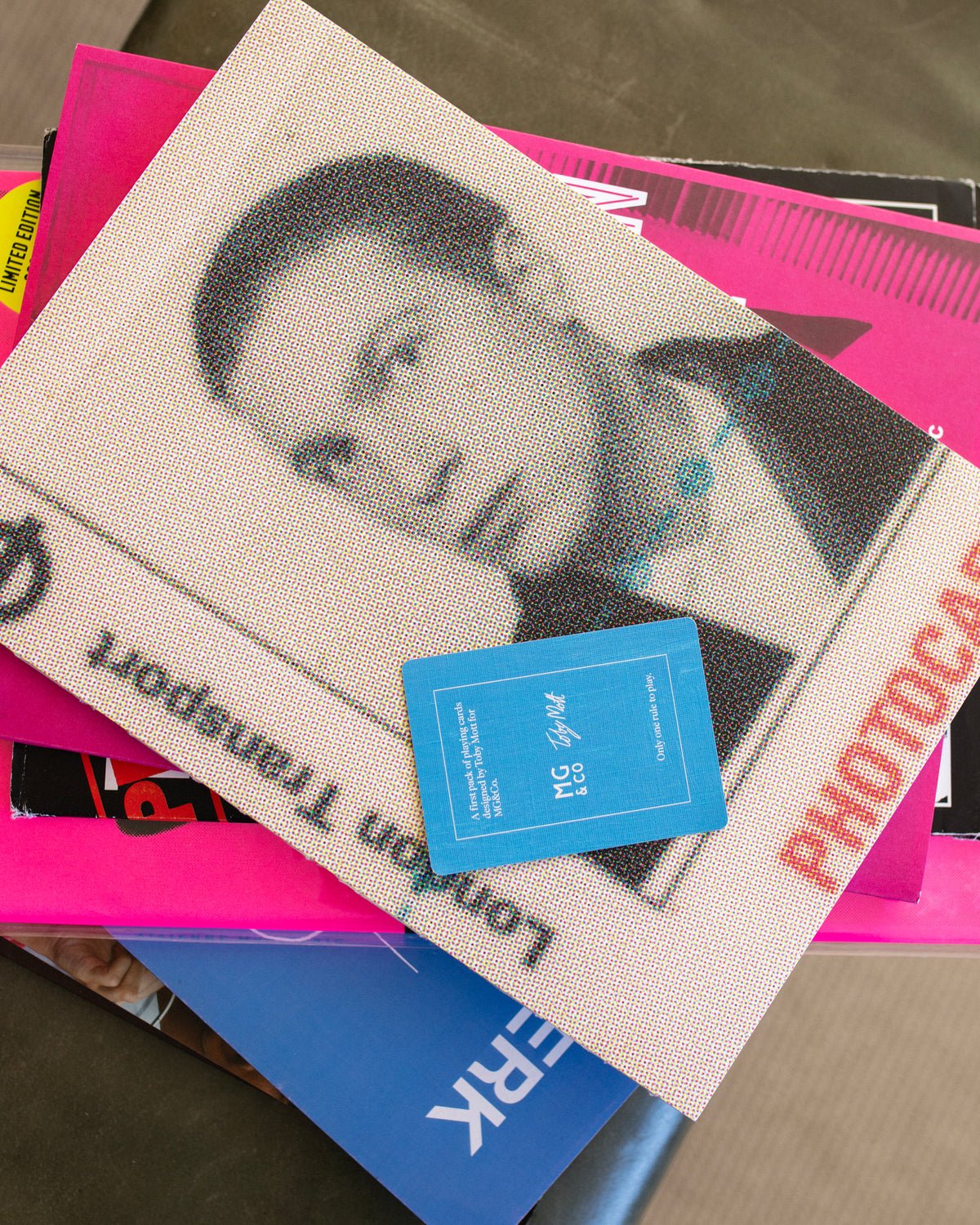
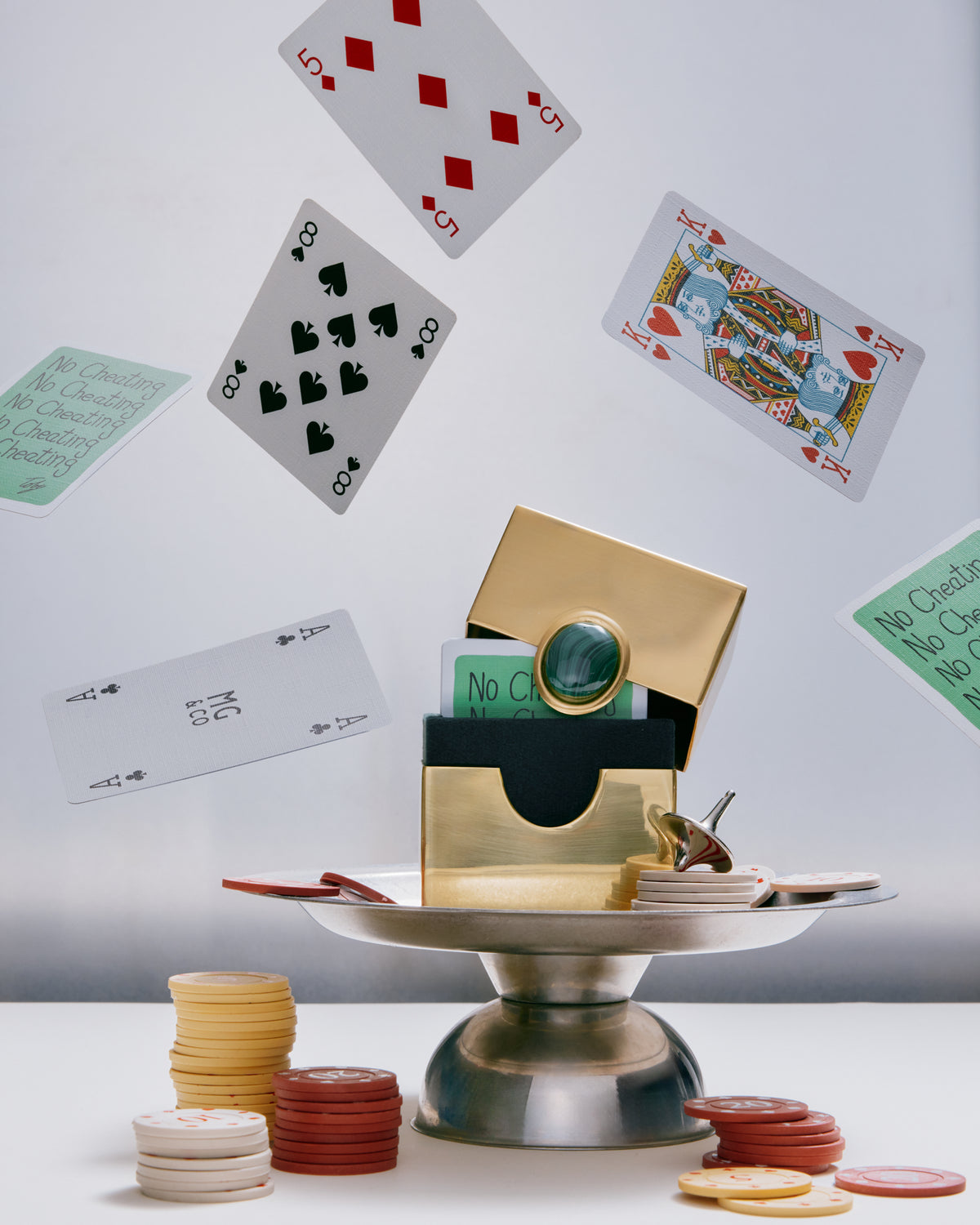
Toby has spent a career putting words on things, and he chose a line that keeps every game friendly: NO CHEATING, hand-lettered across the back of every card. Each deck comes tucked inside our new Playing Card Holder.
We visited Toby in his studio to talk cards, collecting, and what makes a good host.
1. Be honest, are you any good at cards? Ever cheated?
We played cards a great deal as a family because we didn't have a television. It was either cards or conversation, and cards generally seemed the safer option. I'm sure I must have cheated at some point, particularly at poker, although I can't remember exactly how I managed it. Perhaps that makes me a very accomplished cheat, I'm not confessing to anything specific.
2. Your work leans heavily on text and hand-drawn lettering rather than imagery. What draws you to words as pictures?
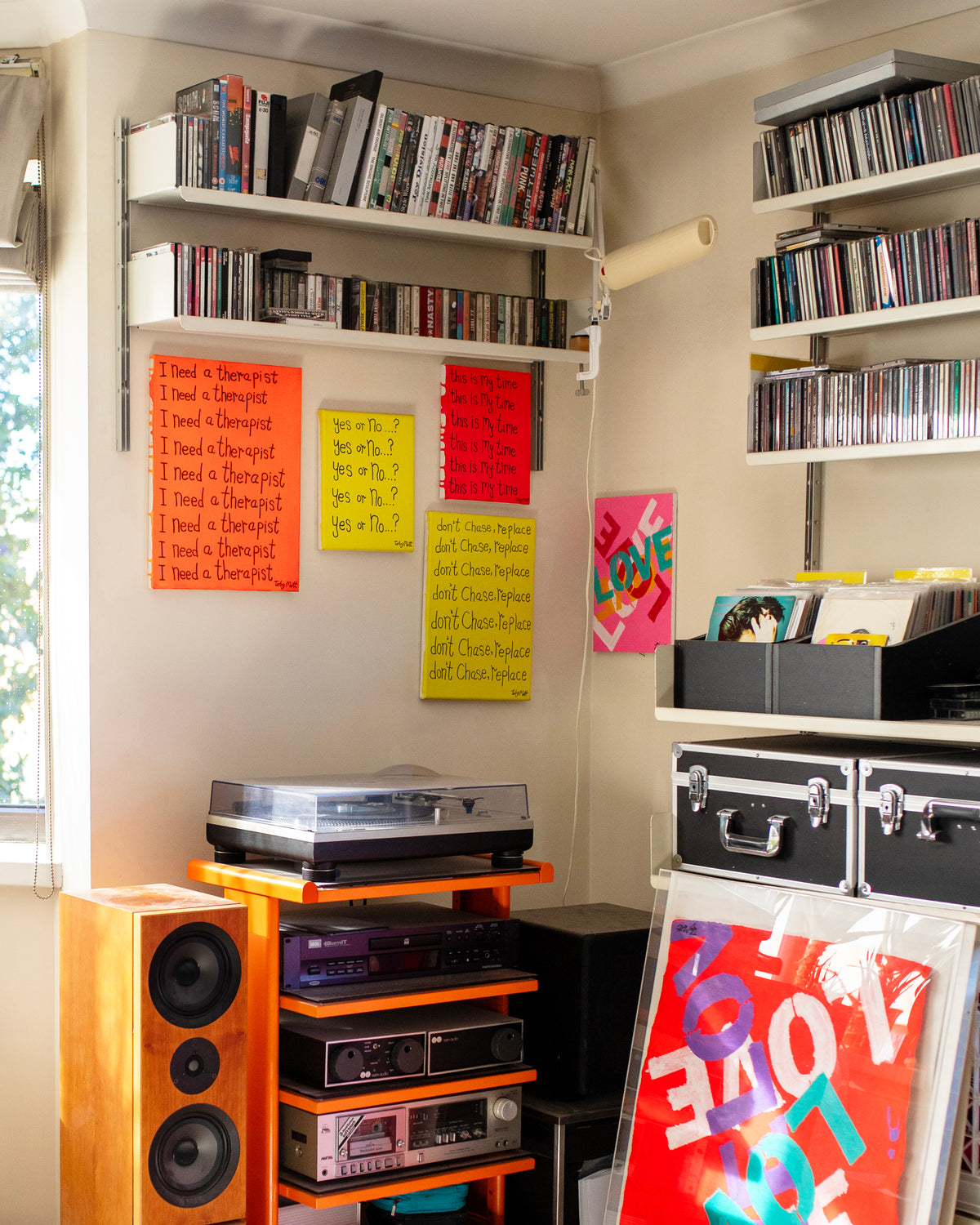
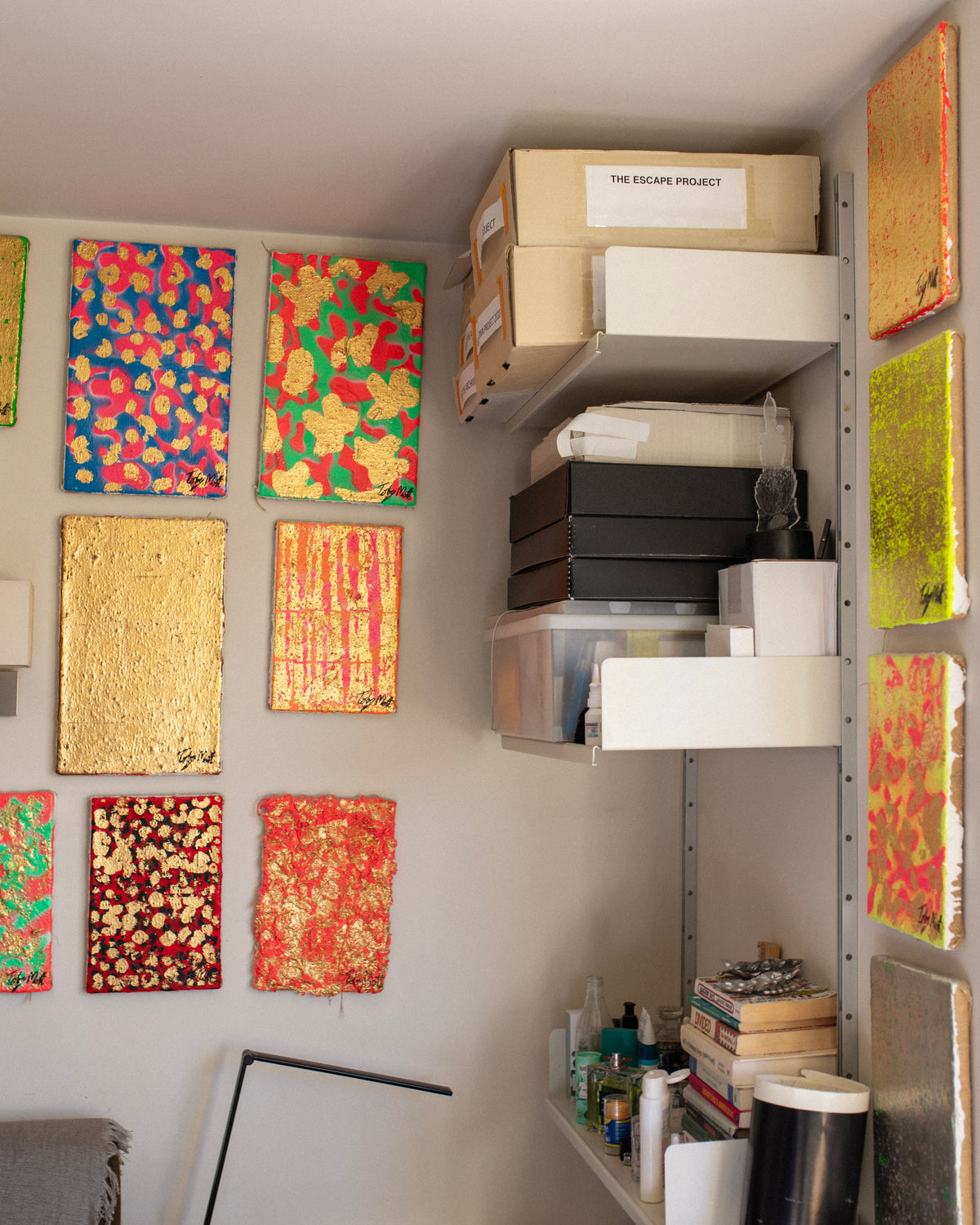
I began making my word art by borrowing the idea of school detention lines, where you were forced to write the same sentence over and over again. I started producing drawings with phrases such as "I NEED HELP" repeated until they filled the entire page. Rather ironically, nobody came to help.
Eventually, these works found their way onto T-shirts and all manner of other products. The idea was always to fill the entire surface so that the words became an image in themselves. The meaning is important, but so is the graphic impact of repetition. I suppose I've managed to turn a childhood punishment into a career, which is a rather satisfying form of revenge.
3. Why do you keep returning to the idea of lines? What keeps pulling you back?
I developed the concept in the late 1990s, but its origins go back to my childhood. At school, writing lines was a standard form of punishment. You'd be instructed to write something like "I WILL NOT RUN IN THE PLAYGROUND" 200 times. It was a rather unimaginative form of discipline, but clearly an effective one, as I've spent much of my adult life doing much the same thing, only now I call it art.
I think the work connects with people of a certain generation who remember that particular humiliation. I'm not sure children are still subjected to it today.
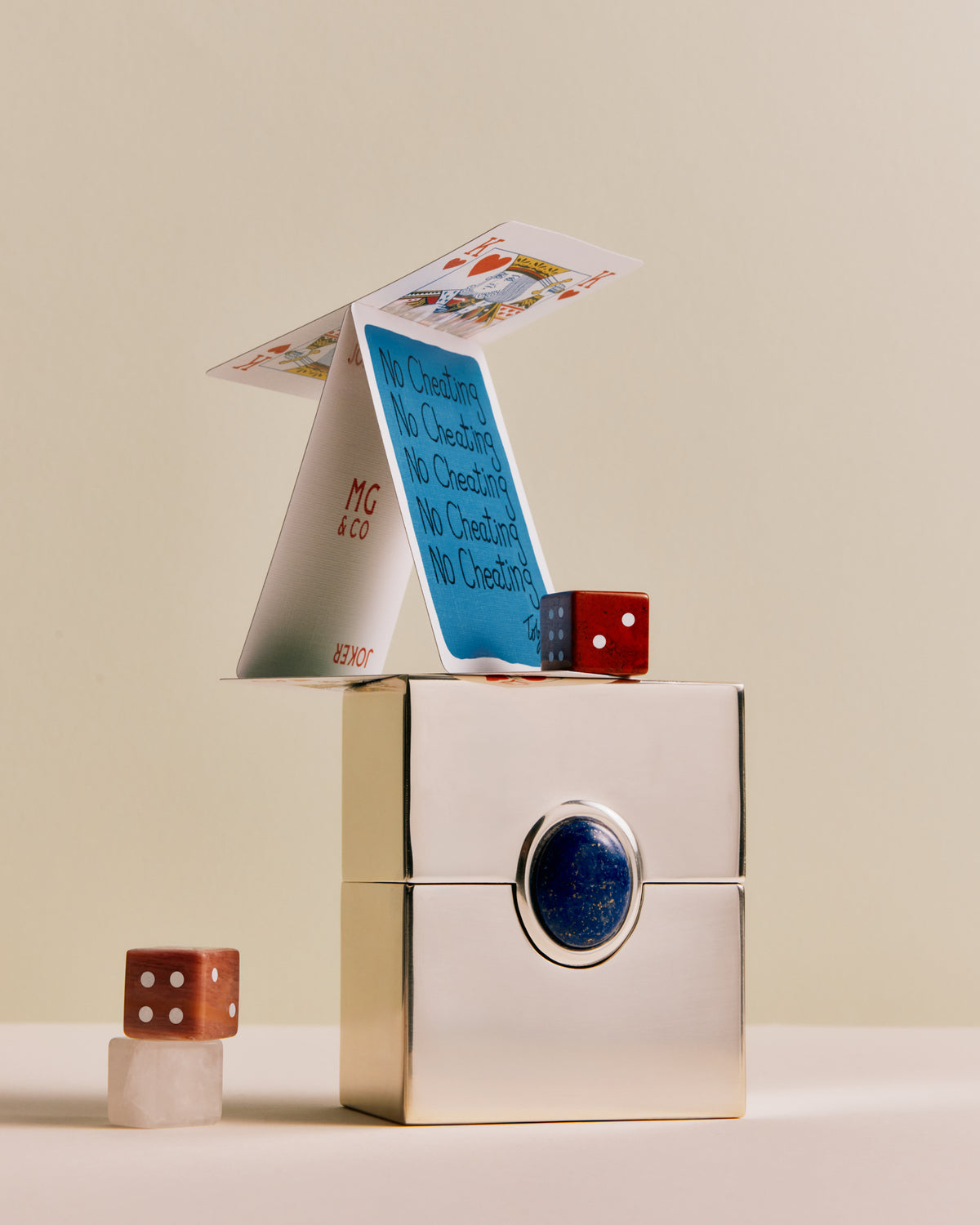
4. Of all the detention lines you could have used, why 'NO CHEATING' for this deck of cards?
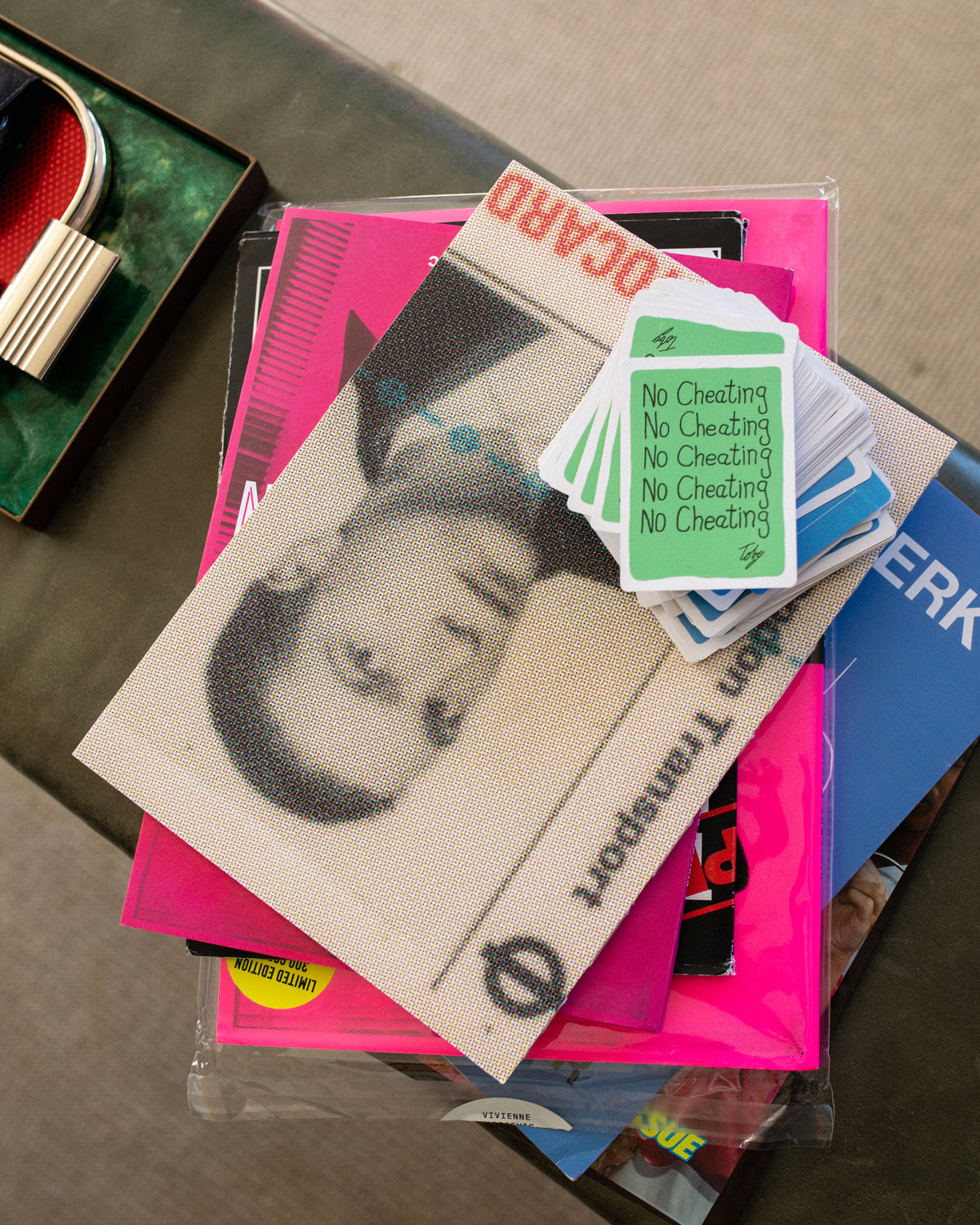
It seemed only fair to remind your opponent not to cheat. After all, they can read the warning while you're holding your cards. It's a rather polite form of psychological warfare. Of course, the more someone insists on not cheating, the more suspicious I become.
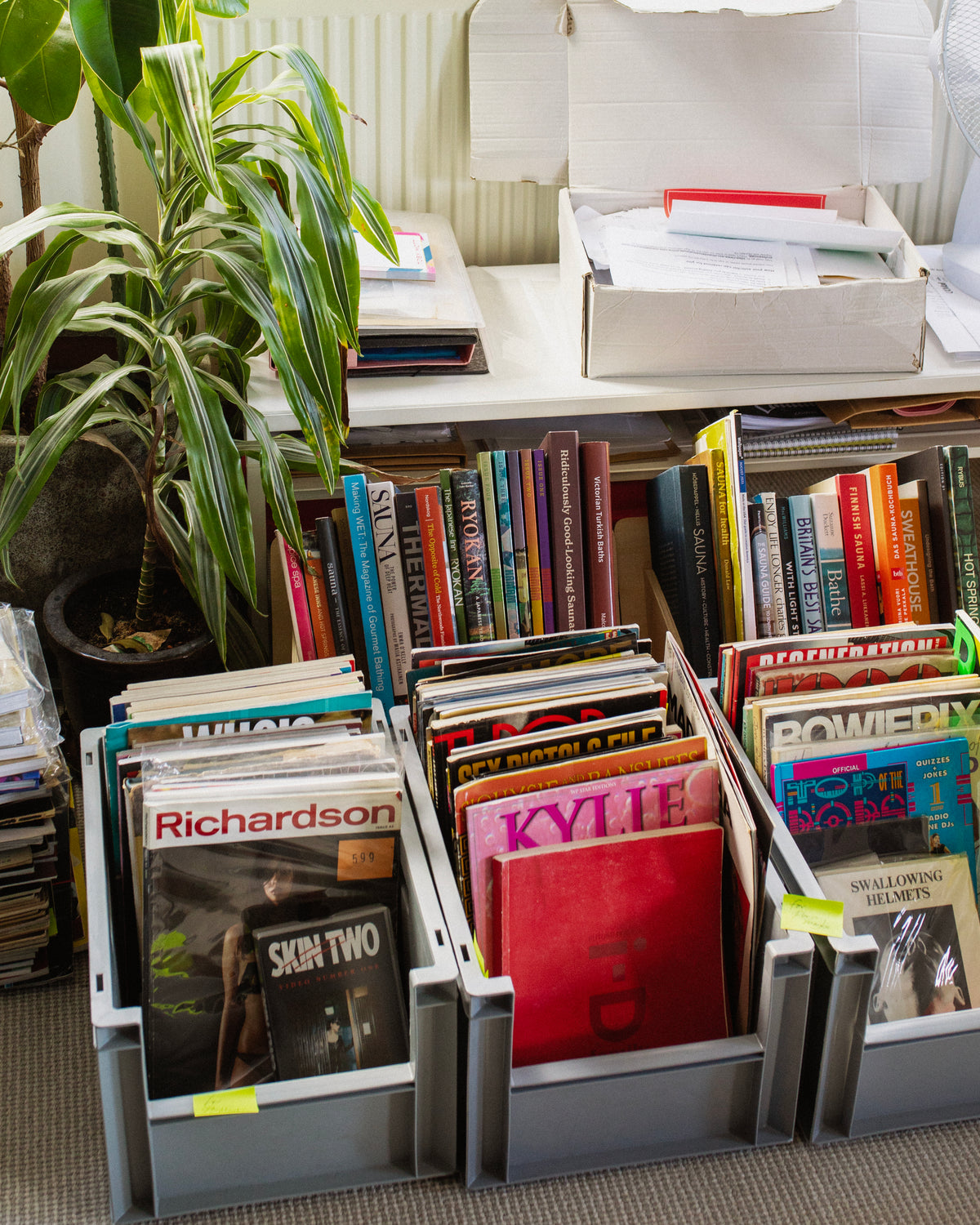
5. You've spent a lifetime building one of the great collections of punk flyers and the printed ephemera of subcultures. Playing cards are ephemeral too. Do you think of these as future ephemera?
I'm not sure I'd describe playing cards as ephemeral in quite the same way as a flyer or handbill. Although they're made of paper, a pack of cards can remain in a family for generations, tucked away in a drawer and brought out on special occasions.
I've spent much of my life collecting things that other people were happy to throw away. Punk flyers, posters, bits of paper that were never intended to survive. It's remarkable how yesterday's rubbish becomes tomorrow's cultural treasure.
Now that these cards carry an artwork on the reverse, I hope they'll be kept and treasured. Although I rather like the idea of someone discovering a battered pack in a drawer in 50 years and wondering why on earth someone had written "NO CHEATING" all over them.
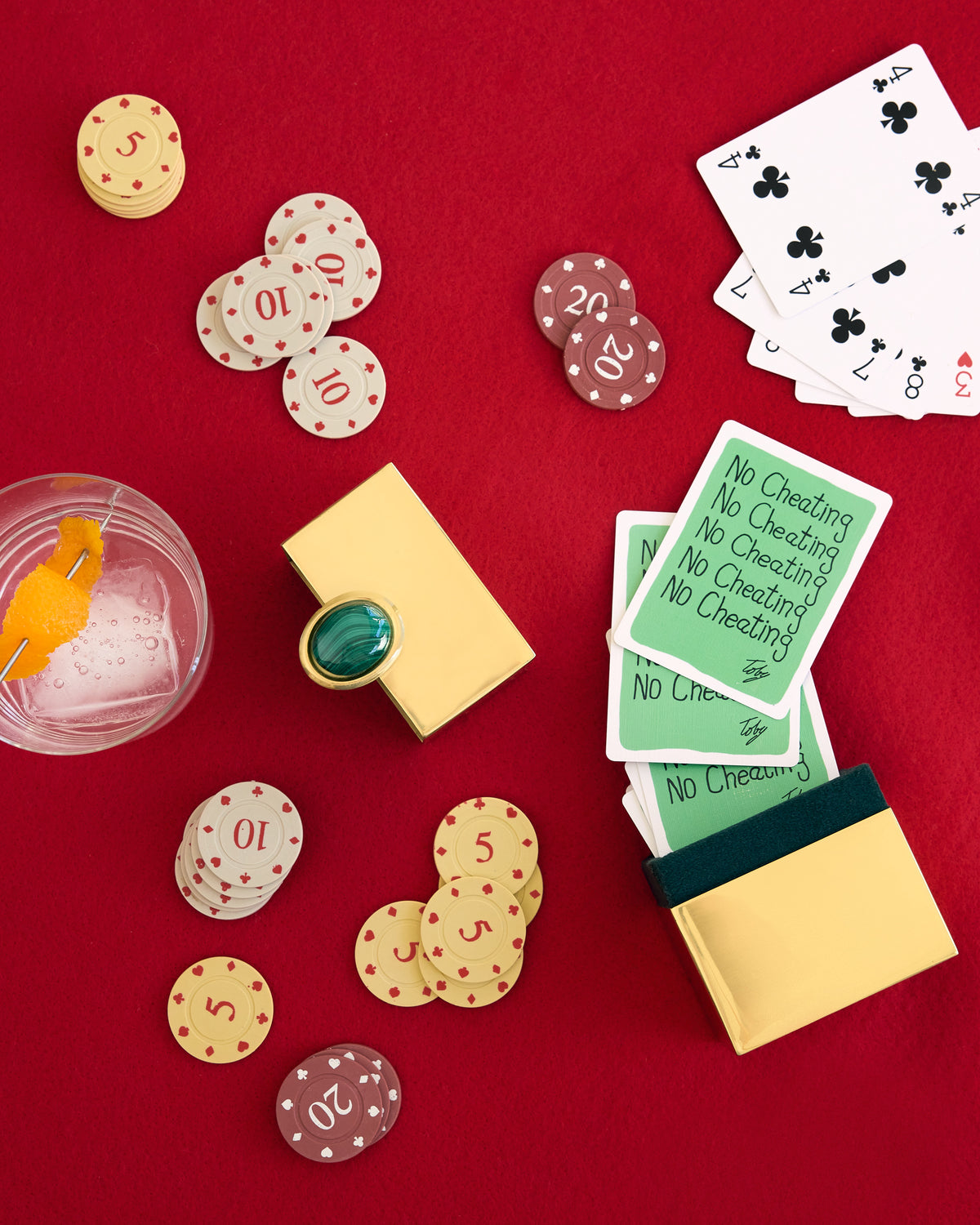
6. These cards will get shuffled, bent and handled. Is that a better fate for art than being framed?
Absolutely. I really hope people use them. I like the idea of the cards accumulating the marks of their own history: bent corners, worn edges, perhaps the odd stain. Those signs of wear and tear become part of the artwork.
There's something rather wonderful about art having a life beyond the gallery wall. I don't particularly want people treating them like sacred relics. Shuffle them, deal them, argue over them. Just don't cheat. I've gone to considerable trouble to make that point.
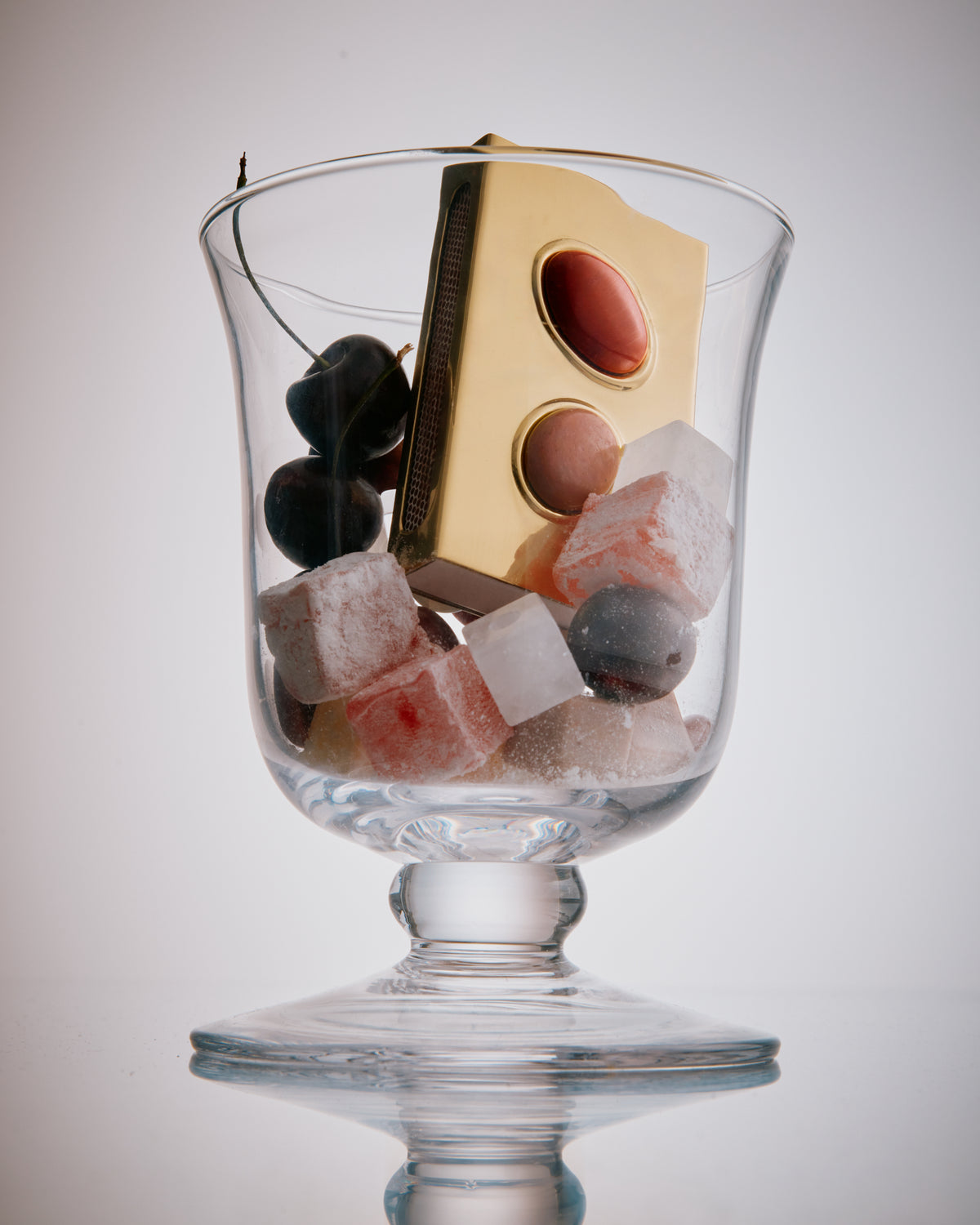
7. There's a lovely contradiction in this collaboration: the handmade mark of punk printed on a deck of playing cards, housed in a polished brass box set with a Malachite stone. What do you make of that collision?
I've always enjoyed the collision of high and low culture. Taking something rooted in the DIY aesthetic of punk and presenting it in a beautifully crafted, polished brass box seems entirely appropriate to me.
I think there's something deliciously subversive about putting a rebellious little artwork inside a luxurious brass box. It's a bit like inviting an anarchist to dinner at the Ritz.
8. Do you have a card game memory that springs to mind?
I still enjoy playing Snap. It's wonderfully simple, surprisingly competitive and keeps the mind sharp. There's something rather satisfying about adults becoming completely consumed by the need to shout "SNAP!" before anyone else.
9. Cards come out when the plates are cleared. They're a prop for the second half of a good evening. Do you think of them as a piece of theatre for hosting?
I often find myself around people playing cards, particularly at the bathhouse, where some of the older gents gather for a game. It's a wonderful social ritual, as much about conversation and companionship as the cards themselves.
There's something reassuring about seeing people sitting around a table playing cards, particularly in a world where everyone seems permanently attached to a screen.
10. What makes a good host in your book? Is a games night the truest test of one?
I think a good host is rather like a theatre director. You set the scene, assemble the cast, create the atmosphere and then allow the evening to unfold. The trick is to make it all appear completely effortless, even when you've spent the entire afternoon worrying about the seating arrangements.
A good evening should have a beginning, a middle and preferably a rather late ending. And, like any good theatrical production, there should be a little drama, plenty of laughter and perhaps one guest who really ought not to have been invited.
11. If you could write one line on the blackboard forever, what would it be?
I AM ALIVE
Showstoppers